

An Influencer Marketing Campaign is one of the most effective ways for businesses to connect with their target audience through trusted creators. Instead of relying only on traditional advertising, brands collaborate with influencers who have built loyal communities on platforms such as Instagram, YouTube, TikTok, LinkedIn, Facebook, and blogs. When executed strategically, these partnerships can increase brand awareness, generate qualified leads, boost sales, and strengthen customer trust.
The rapid growth of social media has changed how people discover products and make purchasing decisions. Consumers are more likely to trust recommendations from creators they follow than generic advertisements. This shift has made influencer marketing an essential part of many digital marketing strategies, whether the goal is launching a new product, increasing website traffic, or improving brand credibility.
However, successful campaigns involve much more than choosing an influencer with a large following. Brands must define clear objectives, identify the right audience, select relevant creators, establish measurable goals, and monitor campaign performance. Without proper planning, even partnerships with popular influencers may fail to deliver meaningful business results.
This comprehensive guide explains everything you need to know about creating an Influencer Marketing Campaign, including campaign planning, influencer selection, budgeting, collaboration strategies, legal considerations, performance measurement, and best practices. Whether you are a beginner or an experienced marketer, this guide will help you build campaigns that create lasting value for both your brand and your audience.
As competition across digital platforms continues to increase, brands are constantly looking for marketing strategies that feel genuine rather than overly promotional. Consumers today spend significant time engaging with creators who consistently share valuable content, personal experiences, and honest recommendations. This has transformed influencer marketing from an optional promotional tactic into a strategic marketing channel for businesses of all sizes. Whether you are a startup with a limited budget or an established company launching a nationwide campaign, collaborating with the right creators can help you reach highly relevant audiences in a more authentic way.
A successful campaign also provides valuable user-generated content, strengthens social proof, and supports long-term customer relationships. However, achieving these results requires careful planning, clear communication, realistic expectations, and ongoing performance analysis. Businesses that focus on building genuine partnerships instead of one-time promotional activities are more likely to create campaigns that generate meaningful engagement, strengthen brand reputation, and deliver sustainable business growth over time.
Quick Answer
An Influencer Marketing Campaign is a structured marketing strategy in which a business partners with content creators to promote products, services, or brand messages to a targeted audience. A successful campaign focuses on audience relevance, authentic content, measurable objectives, and continuous performance analysis rather than follower count alone.
Why Influencer Marketing Matters
People are exposed to thousands of advertisements every day, making it increasingly difficult for brands to capture attention. Influencer marketing provides a more personal approach by delivering recommendations through creators that audiences already know and trust.
A well-planned campaign can help businesses:
- Increase brand awareness
- Reach highly targeted audiences
- Build customer trust
- Generate qualified leads
- Improve engagement rates
- Increase website traffic
- Support product launches
- Drive sales and conversions
Unlike many traditional advertising methods, influencer collaborations often encourage conversations, reviews, and user-generated content that continue providing value even after the campaign ends.
What Is an Influencer Marketing Campaign?
An Influencer Marketing Campaign is a planned collaboration between a brand and one or more influencers to achieve specific marketing objectives.
Campaign goals may include:
- Promoting a product launch
- Increasing brand awareness
- Driving website traffic
- Growing social media followers
- Generating sales
- Collecting user-generated content
- Building brand credibility
- Educating potential customers
Depending on the campaign, influencers may create videos, social media posts, stories, blogs, livestreams, reviews, tutorials, or other forms of content that naturally introduce the brand to their audience.
How an Influencer Marketing Campaign Works
Most campaigns follow a structured workflow from planning to performance analysis.
Business Goals
↓
Audience Research
↓
Influencer Selection
↓
Campaign Planning
↓
Content Creation
↓
Content Approval
↓
Campaign Launch
↓
Performance Tracking
↓
Optimization
↓
Final Campaign Report
Following a clear process helps reduce misunderstandings, improves collaboration, and increases the likelihood of achieving campaign objectives.
Benefits of an Influencer Marketing Campaign
Businesses across industries use influencer marketing because it combines credibility, creativity, and audience targeting.
Some of the most important benefits include:
Greater Brand Awareness
Creators introduce brands to audiences that may not have discovered them through traditional advertising channels.
Improved Customer Trust
Recommendations from trusted creators often feel more authentic than direct advertisements, encouraging stronger customer confidence.
Better Audience Targeting
Businesses can work with creators whose followers closely match their ideal customer profile, improving campaign relevance.
Higher Engagement
Influencer content frequently generates comments, shares, saves, and discussions, creating stronger audience interaction.
Increased Sales Opportunities
When campaigns include compelling calls to action and relevant products, they can contribute to lead generation and sales growth.
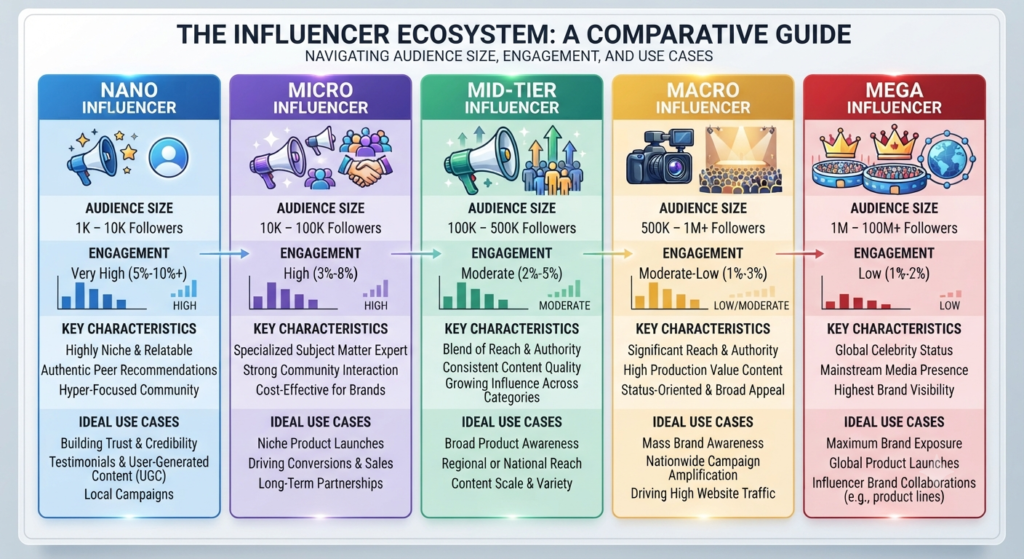
Types of Influencers
Choosing the right influencer depends on campaign objectives rather than follower count alone.
| Influencer Type | Typical Audience Size | Best For |
|---|---|---|
| Nano Influencers | 1K–10K | Local businesses and niche communities |
| Micro Influencers | 10K–100K | High engagement and targeted campaigns |
| Mid-Tier Influencers | 100K–500K | Growing brand awareness |
| Macro Influencers | 500K–1M | National campaigns |
| Mega Influencers | 1M+ | Large-scale brand visibility |
Smaller influencers often have highly engaged communities, while larger influencers provide broader reach. The best choice depends on your campaign goals, budget, and target audience.
Influencer Marketing vs Traditional Advertising
| Influencer Marketing | Traditional Advertising |
|---|---|
| Relies on trusted creators | Controlled by the brand |
| Encourages conversations | One-way communication |
| Highly targeted audiences | Broad audience reach |
| Authentic storytelling | Promotional messaging |
| Flexible content formats | Fixed advertising formats |
| Strong social engagement | Limited direct interaction |
Both approaches can complement each other as part of a comprehensive marketing strategy.
Step 1: Define Clear Campaign Goals
Every successful campaign starts with measurable objectives.
Common goals include:
- Increasing brand awareness
- Driving website traffic
- Generating qualified leads
- Boosting product sales
- Growing email subscribers
- Increasing social engagement
- Promoting a product launch
- Building brand credibility
Avoid vague goals such as “becoming popular.” Instead, establish measurable outcomes that can be evaluated after the campaign.
Step 2: Identify Your Target Audience
Understanding your audience helps you select influencers whose followers genuinely match your potential customers.
Consider factors such as:
- Age
- Gender
- Interests
- Location
- Purchasing behavior
- Income level
- Preferred social platforms
- Online habits
The closer the audience alignment, the greater the likelihood of campaign success.
Step 3: Choose the Right Influencers
Selecting influencers should involve more than reviewing follower counts.
Evaluate creators based on:
- Audience relevance
- Engagement quality
- Content style
- Brand values
- Communication skills
- Content consistency
- Previous collaborations
- Professionalism
Review previous content carefully to ensure the creator’s style aligns with your brand identity.
Step 4: Select the Best Social Platforms
Different platforms serve different campaign objectives.
For example:
- Instagram: Lifestyle, fashion, beauty, food
- YouTube: Reviews, tutorials, long-form education
- TikTok: Short-form creative videos
- LinkedIn: B2B marketing and professional services
- Facebook: Community engagement
- Blogs: Detailed product reviews and SEO content
Choose platforms where your target audience spends the most time instead of trying to be active everywhere.
Step 5: Create a Campaign Brief
A campaign brief helps both the brand and influencer understand expectations before content creation begins.
Include:
- Campaign objectives
- Brand background
- Target audience
- Deliverables
- Content guidelines
- Key messaging
- Timeline
- Approval process
- Disclosure requirements
- Performance expectations
A detailed brief reduces confusion and improves collaboration.
Step 6: Establish Campaign Budgets
Campaign budgets vary depending on influencer size, content requirements, campaign duration, exclusivity agreements, and production complexity.
Budget planning may include:
- Influencer fees
- Product samples
- Shipping costs
- Video production
- Photography
- Advertising support
- Giveaway expenses
- Performance bonuses
Rather than choosing creators based only on price, evaluate the potential return on investment and audience relevance.
Step 7: Develop Authentic Content
Authenticity is one of the biggest strengths of influencer marketing.
Instead of providing rigid scripts, brands should communicate key messages while allowing creators enough creative freedom to produce content that matches their audience’s expectations.
Authentic storytelling often performs better than highly promotional content because audiences respond more positively to genuine recommendations and personal experiences.
Step 8: Build Strong Collaboration Agreements
Clear agreements help prevent misunderstandings and keep everyone aligned throughout the campaign. Before any content is created, discuss expectations openly and document the important details.
A professional agreement should cover:
- Campaign objectives
- Deliverables and content formats
- Publishing schedule
- Payment terms
- Content ownership
- Exclusivity clauses (if required)
- Approval process
- Revision policy
- Disclosure requirements
- Performance reporting
Well-defined agreements create smoother collaborations and protect both the brand and the creator.
Step 9: Follow Advertising and Disclosure Guidelines
Transparency is essential for maintaining audience trust. Sponsored collaborations should always comply with the advertising rules that apply in the target market.
Common disclosure methods include:
- #Ad
- #Sponsored
- Paid Partnership labels
- Brand collaboration tags
- Clear sponsorship statements
Honest disclosure helps audiences understand the nature of the collaboration while supporting long-term credibility.
Step 10: Launch and Monitor the Campaign
Once content goes live, actively monitor its performance rather than waiting until the campaign ends.
Track factors such as:
- Audience engagement
- Reach
- Website traffic
- Link clicks
- Comments
- Shares
- Saves
- Conversions
Monitoring results during the campaign allows businesses to identify opportunities for improvement and make adjustments where appropriate.
Step 11: Measure Campaign Performance
Every Influencer Marketing Campaign should be evaluated using measurable business outcomes rather than vanity metrics alone.
Important performance indicators include:
| Metric | Why It Matters |
|---|---|
| Reach | Number of people exposed to the campaign |
| Impressions | Total content views |
| Engagement Rate | Audience interaction quality |
| Website Traffic | Visitors generated from influencer content |
| Click-Through Rate | Interest in the campaign |
| Leads | Potential customers acquired |
| Conversions | Desired customer actions completed |
| Revenue | Financial impact of the campaign |
| Return on Investment (ROI) | Overall campaign effectiveness |
Looking beyond follower counts provides a clearer understanding of actual campaign success.
Step 12: Repurpose High-Performing Content
High-quality influencer content can continue delivering value long after the original campaign ends.
Possible uses include:
- Website product pages
- Social media posts
- Email marketing
- Paid advertisements
- Landing pages
- Blog articles
- Customer testimonials
- Product catalogs
Always obtain the necessary usage rights before repurposing creator content.
Step 13: Build Long-Term Creator Relationships
Many successful brands work with the same creators across multiple campaigns instead of constantly searching for new influencers.
Long-term partnerships often provide:
- Greater audience trust
- More authentic recommendations
- Consistent brand messaging
- Faster collaboration
- Better campaign performance
- Stronger community engagement
Building lasting relationships can create greater value than one-time promotional partnerships.
Step 14: Optimize Future Campaigns
Every campaign provides valuable lessons.
Review:
- Which creators performed best
- Which platforms generated results
- Which content formats received the highest engagement
- Which audience segments converted most effectively
- Which calls to action produced the strongest response
Use these insights to improve future collaborations and marketing strategies.
Step 15: Scale Your Influencer Marketing Strategy
Once a campaign consistently delivers positive results, consider expanding your influencer program.
Growth strategies may include:
- Collaborating with multiple creators
- Testing new platforms
- Launching seasonal campaigns
- Creating ambassador programs
- Combining influencer marketing with paid advertising
- Partnering with industry experts
- Encouraging user-generated content
Scaling gradually allows businesses to maintain quality while increasing campaign reach.
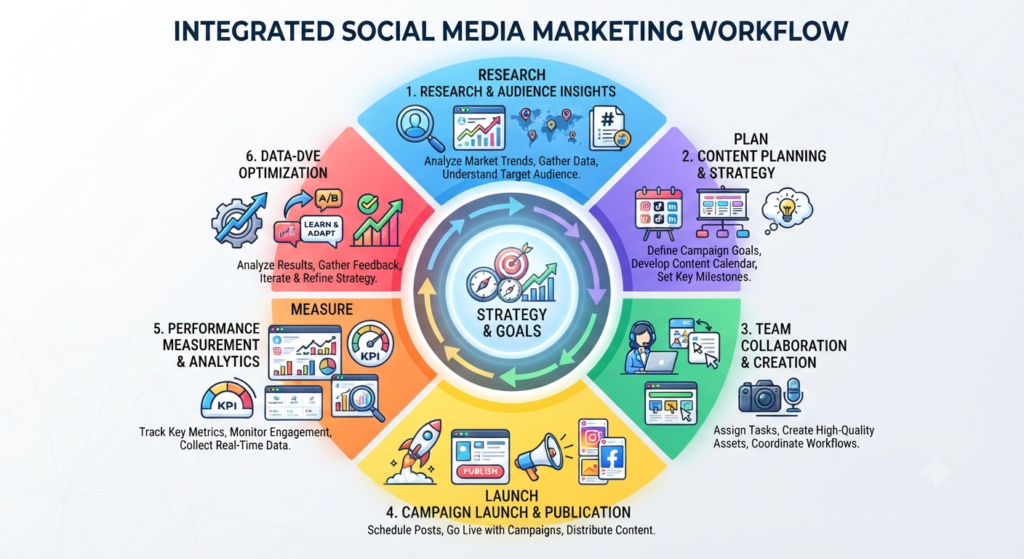
Influencer Marketing Campaign Framework
A structured workflow helps ensure every campaign follows a consistent process.
Research
Understand your target audience, competitors, and campaign objectives.
Plan
Choose suitable creators, define budgets, and establish measurable goals.
Collaborate
Develop clear campaign briefs, communicate expectations, and support creative content development.
Launch
Publish content according to the agreed schedule.
Measure
Track engagement, traffic, conversions, and return on investment.
Improve
Analyze campaign results and apply insights to future collaborations.
Following this framework makes every Influencer Marketing Campaign more organized and easier to evaluate.
Influencer Types Comparison
| Influencer Type | Main Advantage | Best Use Case |
|---|---|---|
| Nano | Strong community trust | Local and niche brands |
| Micro | High engagement | Product launches and lead generation |
| Mid-Tier | Balanced reach and engagement | Growing businesses |
| Macro | Large audience | National campaigns |
| Mega | Maximum visibility | Global brand awareness |
Selecting the right creator depends on business goals rather than follower count alone.
30-Day Influencer Marketing Action Plan
Week 1
- Define campaign goals
- Research your audience
- Set campaign budget
- Identify potential influencers
Week 2
- Contact shortlisted creators
- Evaluate engagement quality
- Finalize campaign agreements
- Prepare campaign brief
Week 3
- Review content drafts
- Approve creative assets
- Schedule publishing dates
- Prepare tracking links
Week 4
- Launch campaign
- Monitor performance
- Analyze campaign results
- Document lessons for future campaigns
A structured roadmap helps businesses manage campaigns efficiently while maintaining consistent quality.
Common Mistakes to Avoid
Avoid these common mistakes when planning an Influencer Marketing Campaign:
- Choosing influencers based only on follower count
- Ignoring audience relevance
- Setting unclear objectives
- Providing overly restrictive content guidelines
- Forgetting disclosure requirements
- Tracking only likes and comments
- Failing to monitor campaign performance
- Ignoring long-term partnerships
- Neglecting post-campaign analysis
- Expecting immediate results from every collaboration
Avoiding these mistakes improves both campaign effectiveness and return on investment.
Pro Tips
- Prioritize audience quality over audience size.
- Work with creators whose values align with your brand.
- Encourage authentic storytelling instead of scripted promotions.
- Use trackable links to measure campaign performance.
- Review engagement quality before selecting influencers.
- Test different content formats across platforms.
- Build long-term partnerships with high-performing creators.
- Continuously optimize future campaigns using performance insights.
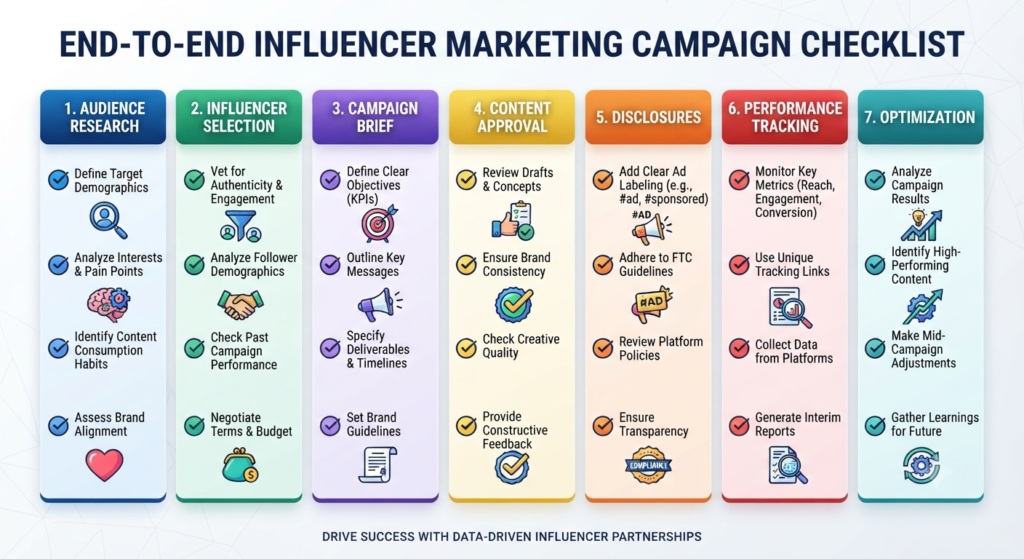
Influencer Marketing Campaign Checklist
Before launching your campaign, confirm that you have:
✔ Defined measurable campaign goals
✔ Identified your target audience
✔ Selected suitable influencers
✔ Created a detailed campaign brief
✔ Agreed on deliverables and timelines
✔ Established disclosure requirements
✔ Prepared campaign tracking links
✔ Planned performance measurement
✔ Secured content usage rights
✔ Scheduled post-campaign analysis
✔ Documented key performance indicators
✔ Planned future optimization
Frequently Asked Questions
What is an Influencer Marketing Campaign?
An Influencer Marketing Campaign is a planned collaboration between a business and content creators to promote products, services, or brand messages to a targeted audience through authentic content.
How do businesses choose the right influencers?
Brands should evaluate audience relevance, engagement quality, content style, professionalism, brand alignment, and previous collaborations instead of relying only on follower numbers.
How is campaign success measured?
Performance is commonly evaluated using reach, engagement, website traffic, conversions, revenue, and overall return on investment.
Are micro-influencers better than celebrity influencers?
It depends on campaign objectives. Micro-influencers often provide stronger engagement within niche communities, while celebrity influencers offer greater reach and brand visibility.
How long should an influencer campaign last?
Campaign duration depends on business goals, content requirements, and budget. Some campaigns last a few days, while ambassador partnerships may continue for several months.
Conclusion
A successful Influencer Marketing Campaign is built on careful planning, audience understanding, authentic creator partnerships, and continuous performance analysis. Rather than focusing solely on follower counts, businesses achieve better results by selecting influencers whose audiences genuinely align with their target customers. Clear campaign objectives, transparent communication, and measurable success indicators create a strong foundation for meaningful collaborations.
The most effective campaigns treat influencers as creative partners instead of simple advertising channels. Allowing creators the flexibility to communicate in their own style often produces more authentic content, stronger audience engagement, and greater trust. Combined with proper disclosure practices, performance tracking, and long-term relationship building, this approach supports sustainable brand growth.
Influencer marketing continues to evolve alongside social media platforms and consumer expectations. Businesses that regularly analyze campaign results, experiment with new content formats, and adapt their strategies based on real performance data are more likely to remain competitive. With thoughtful planning and continuous improvement, an Influencer Marketing Campaign can become a valuable component of a long-term digital marketing strategy.