

Social Media Marketing has become one of the most effective digital marketing strategies for businesses of all sizes. With billions of people using social media platforms every day, businesses have an incredible opportunity to connect with their target audience, increase brand awareness, generate leads, and drive sales. However, simply posting content isn’t enough. A successful Social Media Marketing strategy requires planning, consistency, audience research, engaging content, and continuous optimization.
Whether you’re a small business owner, freelancer, digital marketer, or entrepreneur, learning Social Media Marketing can help you build meaningful relationships with your audience while achieving measurable business results. Unlike traditional advertising, social media allows two-way communication, enabling brands to engage directly with customers, gather feedback, and build trust over time.
This comprehensive guide explains everything you need to know about Social Media Marketing, including how it works, platform selection, content planning, audience targeting, performance measurement, and best practices. By following the strategies in this guide, you’ll be able to create an effective Social Media Marketing plan that supports long-term business growth.
Quick Answer
Social Media Marketing is the process of using social media platforms to promote a business, product, or service by creating valuable content, engaging with audiences, running paid campaigns, and analyzing performance to achieve marketing goals such as brand awareness, lead generation, website traffic, and sales.
Why Social Media Marketing Matters
Modern consumers spend a significant amount of time on social media every day. Businesses that establish a strong presence on these platforms have more opportunities to connect with potential customers throughout their buying journey.
A well-executed Social Media Marketing strategy helps businesses:
- Increase brand awareness
- Build customer trust
- Generate qualified leads
- Drive website traffic
- Improve customer engagement
- Support SEO through increased brand visibility
- Strengthen customer relationships
- Increase sales opportunities
Unlike one-way advertising channels, Social Media Marketing encourages conversations that help businesses better understand customer needs and preferences.
What Is Social Media Marketing?
Social Media Marketing is a digital marketing approach that involves creating, publishing, promoting, and managing content across social media platforms to achieve specific business objectives. These objectives may include increasing brand visibility, growing an online community, generating leads, or driving conversions.
An effective Social Media Marketing strategy includes:
- Audience research
- Platform selection
- Content planning
- Content creation
- Community management
- Paid advertising
- Performance analysis
- Continuous optimization
Rather than posting randomly, businesses use a structured approach to ensure every piece of content contributes to their overall marketing goals.
How Social Media Marketing Works
The Social Media Marketing process follows a continuous cycle that focuses on audience engagement and ongoing improvement.
Business Goals
↓
Audience Research
↓
Platform Selection
↓
Content Planning
↓
Content Creation
↓
Content Publishing
↓
Audience Engagement
↓
Performance Analysis
↓
Optimization
↓
Business Growth
Each stage builds on the previous one, creating a repeatable workflow that improves results over time.
Core Components of Social Media Marketing
Every successful Social Media Marketing strategy includes several essential components.
| Component | Purpose |
|---|---|
| Business Goals | Define measurable objectives |
| Audience Research | Understand customer needs |
| Platform Selection | Reach the right audience |
| Content Strategy | Deliver valuable information |
| Content Calendar | Maintain consistency |
| Community Engagement | Build relationships |
| Analytics | Measure success |
| Optimization | Improve future performance |
Skipping any of these components can reduce the effectiveness of your Social Media Marketing efforts.
Benefits of Social Media Marketing
A well-planned Social Media Marketing strategy provides long-term benefits beyond increasing followers.
Increase Brand Awareness
Consistent posting helps more people discover your business and become familiar with your products or services.
Build Customer Trust
Educational and helpful content positions your business as a reliable source of information, making customers more confident in choosing your brand.
Generate Quality Leads
Sharing valuable content encourages potential customers to visit your website, subscribe to newsletters, or request more information.
Improve Customer Engagement
Responding to comments, messages, and discussions strengthens relationships and creates a loyal online community.
Cost-Effective Marketing
Compared to many traditional advertising methods, Social Media Marketing allows businesses to reach targeted audiences with flexible budgets.
Better Customer Insights
Social media analytics provide valuable information about audience behavior, helping businesses improve future marketing decisions.
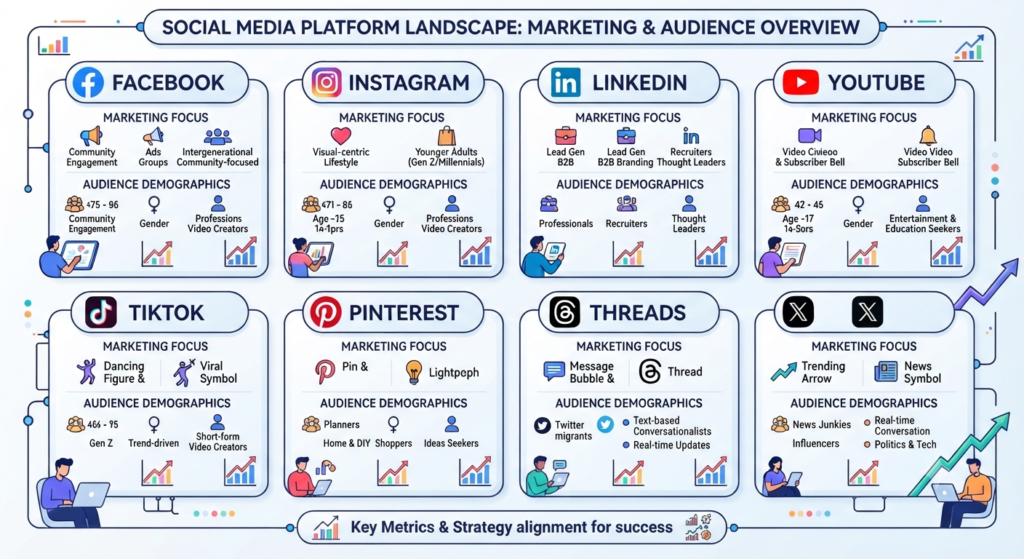
Popular Social Media Marketing Platforms
Different platforms serve different audiences and marketing objectives.
| Platform | Best For |
|---|---|
| Community building, local businesses | |
| Visual branding and product marketing | |
| B2B marketing and professional networking | |
| YouTube | Educational and long-form video content |
| X (Twitter) | News, updates, and conversations |
| Lifestyle, DIY, fashion, and eCommerce | |
| TikTok | Short-form creative videos |
| Threads | Brand conversations and community engagement |
Selecting the right platforms is a key part of an effective Social Media Marketing strategy.
Choosing the Right Platform
Not every business needs to be active on every social media platform.
Consider:
- Where your audience spends time
- Your content format
- Industry trends
- Available resources
- Marketing goals
For example:
Local Business
Best Platforms:
- Google Business Profile
B2B Company
Best Platforms:
- YouTube
- X
Ecommerce Brand
Best Platforms:
- TikTok
Choosing fewer platforms and managing them well often produces better results than trying to maintain a presence everywhere.
Step 1: Define Your Goals
Every Social Media Marketing campaign should begin with clear objectives.
Examples include:
- Increase followers
- Generate leads
- Increase website traffic
- Build brand awareness
- Improve customer engagement
- Increase online sales
- Promote a product launch
- Build an online community
Clearly defined goals make it easier to measure success.
Step 2: Understand Your Target Audience
Audience research is one of the most important parts of Social Media Marketing.
Identify:
- Age
- Gender
- Location
- Occupation
- Interests
- Problems
- Purchasing behavior
- Preferred social media platforms
Create a Buyer Persona
Example:
Name: Sarah
Age: 30
Occupation: Small Business Owner
Goals:
- Increase online sales
- Build brand awareness
Challenges:
- Limited marketing budget
- Lack of social media experience
Preferred Platforms:
Creating detailed buyer personas helps you produce content that addresses real customer needs.
Step 3: Research Your Competitors
Competitor analysis provides valuable insights without copying their content.
Study:
- Posting frequency
- Content types
- Engagement levels
- Hashtag usage
- Visual style
- Audience interactions
- Popular topics
Ask yourself:
- What works well?
- What gaps exist?
- What can you improve?
A successful Social Media Marketing strategy focuses on providing unique value rather than imitating competitors.
Step 4: Develop Your Content Strategy
Content is the foundation of Social Media Marketing.
Plan a balanced mix of content categories.
Examples include:
Educational Content
- Tutorials
- How-to guides
- Industry tips
- FAQs
Entertaining Content
- Behind-the-scenes videos
- Memes (when appropriate)
- Interactive polls
- Quizzes
Inspirational Content
- Success stories
- Customer experiences
- Motivational posts
- Industry achievements
Promotional Content
- Product launches
- Discounts
- New services
- Limited-time offers
A common recommendation is to prioritize value-driven content and use promotional posts selectively so your audience remains engaged rather than feeling constantly sold to.
Step 5: Create a Content Calendar
Consistency is more important than posting randomly.
A content calendar helps organize:
- Publishing dates
- Platforms
- Topics
- Content formats
- Target audience
- Campaign objectives
- Responsible team members
- Performance review dates
Planning content in advance saves time and ensures your Social Media Marketing remains aligned with business goals.
Step 6: Create High-Quality Content
High-quality content attracts attention and encourages engagement.
Before publishing, ask:
- Is this useful?
- Is it easy to understand?
- Does it solve a problem?
- Is the design visually appealing?
- Does it encourage interaction?
- Is there a clear call to action?
Every post should provide value, whether it’s educational, entertaining, or inspiring.
Step 7: Build a Consistent Brand Voice
Your audience should immediately recognize your brand through its communication style.
Maintain consistency in:
- Tone of voice
- Visual identity
- Brand colors
- Typography
- Messaging
- Posting style
A consistent brand identity strengthens recognition and trust, making your Social Media Marketing more effective over time.
Step 8: Create a Consistent Posting Schedule
A successful Social Media Marketing strategy depends on consistency rather than posting large amounts of content in a short period. Publishing regularly keeps your audience engaged and helps build long-term relationships.
A posting schedule should consider:
- Audience activity times
- Platform-specific best practices
- Content quality
- Team resources
- Campaign objectives
Sample Weekly Posting Schedule
| Day | Content Type |
|---|---|
| Monday | Educational Post |
| Tuesday | Industry Tip |
| Wednesday | Behind-the-Scenes |
| Thursday | Customer Story |
| Friday | Product Showcase |
| Saturday | Interactive Poll or Quiz |
| Sunday | Weekly Recap or Video |
Adjust your schedule based on audience engagement and business goals rather than following a fixed formula.
Step 9: Increase Engagement
Engagement is one of the strongest indicators of an effective Social Media Marketing strategy. Building relationships with your audience encourages loyalty and increases the likelihood that your content will be shared.
Ways to improve engagement include:
- Reply to comments promptly
- Answer direct messages professionally
- Ask questions in captions
- Create polls and quizzes
- Encourage user-generated content
- Host live sessions
- Share customer success stories
- Thank followers for their support
Social media should be treated as a conversation rather than a one-way broadcasting channel.
Step 10: Use Paid Social Media Advertising
Organic reach is valuable, but paid advertising can help businesses reach a larger and more targeted audience.
Paid Social Media Marketing campaigns can help:
- Generate leads
- Increase website traffic
- Promote products
- Build brand awareness
- Grow followers
- Retarget previous visitors
Start with a small budget, monitor campaign performance, and scale successful campaigns gradually.
Step 11: Measure Performance
Tracking performance helps determine whether your Social Media Marketing efforts are meeting business objectives.
Important metrics include:
| Metric | Why It Matters |
|---|---|
| Reach | Measures how many users saw your content |
| Impressions | Shows total content views |
| Engagement Rate | Indicates audience interaction |
| Click-Through Rate (CTR) | Measures link effectiveness |
| Follower Growth | Tracks audience expansion |
| Website Traffic | Shows visits from social platforms |
| Leads Generated | Measures business impact |
| Conversion Rate | Indicates campaign effectiveness |
Review these metrics regularly and use the insights to improve future campaigns.
Step 12: Use Analytics for Better Decisions
Analytics transform data into actionable insights.
Evaluate:
- Best-performing posts
- Most engaging content formats
- Audience demographics
- Peak activity times
- Traffic sources
- Conversion performance
Instead of guessing what works, use performance data to refine your Social Media Marketing strategy over time.
Step 13: Repurpose Your Content
Creating new content for every platform can be time-consuming. Repurposing allows you to maximize the value of each content asset.
For example, one blog article can become:
- LinkedIn post
- Instagram carousel
- Facebook post
- Short-form video
- YouTube video
- Infographic
- Email newsletter
- Podcast discussion
Repurposing saves time while increasing your content’s reach across multiple platforms.
Step 14: Build a Community
Growing followers is important, but building a community creates lasting relationships.
Encourage community participation by:
- Asking meaningful questions
- Featuring customer stories
- Hosting Q&A sessions
- Running contests responsibly
- Celebrating milestones
- Encouraging discussions
- Responding respectfully to feedback
A strong community increases trust, repeat engagement, and brand advocacy.
Step 15: Continuously Optimize Your Strategy
The digital landscape changes frequently. Platforms introduce new features, audience behavior evolves, and content trends shift over time.
Improve your Social Media Marketing strategy by:
- Reviewing analytics monthly
- Testing different content formats
- Updating your content calendar
- Experimenting with posting times
- Refining calls to action
- Monitoring competitor activity
- Following platform updates
Continuous optimization helps maintain consistent performance.
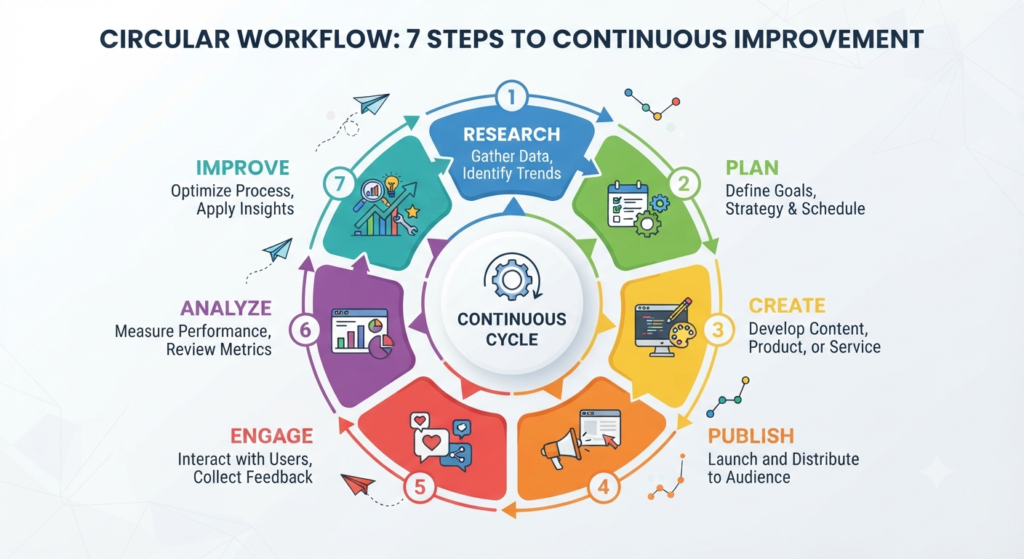
Social Media Marketing Framework
Use this simple framework to organize your efforts:
Research
Understand your audience and competitors.
Plan
Define goals and create a content calendar.
Create
Produce valuable and engaging content.
Publish
Share content consistently across selected platforms.
Engage
Respond to comments, messages, and discussions.
Analyze
Measure key performance indicators.
Improve
Refine your strategy using performance insights.
This repeatable workflow makes your Social Media Marketing more organized and scalable.
Organic vs Paid Social Media Marketin
| Organic Social Media Marketing | Paid Social Media Marketing |
|---|---|
| Builds long-term relationships | Delivers faster reach |
| Lower financial investment | Requires advertising budget |
| Focuses on engagement | Focuses on targeted campaigns |
| Sustainable audience growth | Immediate visibility |
| Supports brand authority | Supports lead generation and sales |
Most businesses achieve the best results by combining both approaches.
Social Media Marketing Tools
The right tools can simplify planning, publishing, and reporting.
| Tool Type | Purpose |
|---|---|
| Content Scheduling | Publish posts automatically |
| Graphic Design | Create visuals |
| Video Editing | Produce engaging videos |
| Analytics | Track performance |
| Social Listening | Monitor brand mentions |
| AI Writing Tools | Generate content ideas |
| URL Tracking | Measure campaign traffic |
Choose tools based on your workflow and business needs rather than using every available option.
30-Day Social Media Marketing Implementation Roadmap
Week 1
- Define goals
- Identify target audience
- Research competitors
- Select platforms
Week 2
- Create a content calendar
- Design brand templates
- Develop content pillars
Week 3
- Publish consistent content
- Engage with followers
- Monitor analytics
Week 4
- Review performance
- Optimize underperforming content
- Plan next month’s strategy
Following a structured roadmap helps maintain consistency and measurable progress.
Common Mistakes to Avoid
Avoid these mistakes when building your Social Media Marketing strategy:
- Posting without clear goals
- Ignoring audience feedback
- Publishing inconsistent content
- Using every platform without a strategy
- Over-promoting products
- Ignoring analytics
- Buying fake followers
- Using low-quality visuals
- Failing to respond to comments
- Posting without a call to action
Recognizing and correcting these issues early can significantly improve your long-term results.
Pro Tips
- Focus on quality rather than quantity.
- Create platform-specific content instead of posting identical updates everywhere.
- Encourage conversations instead of simply broadcasting messages.
- Repurpose high-performing content.
- Monitor analytics every month.
- Test different content formats and posting times.
- Maintain a consistent visual identity.
- Keep learning as platforms and audience behavior evolve.
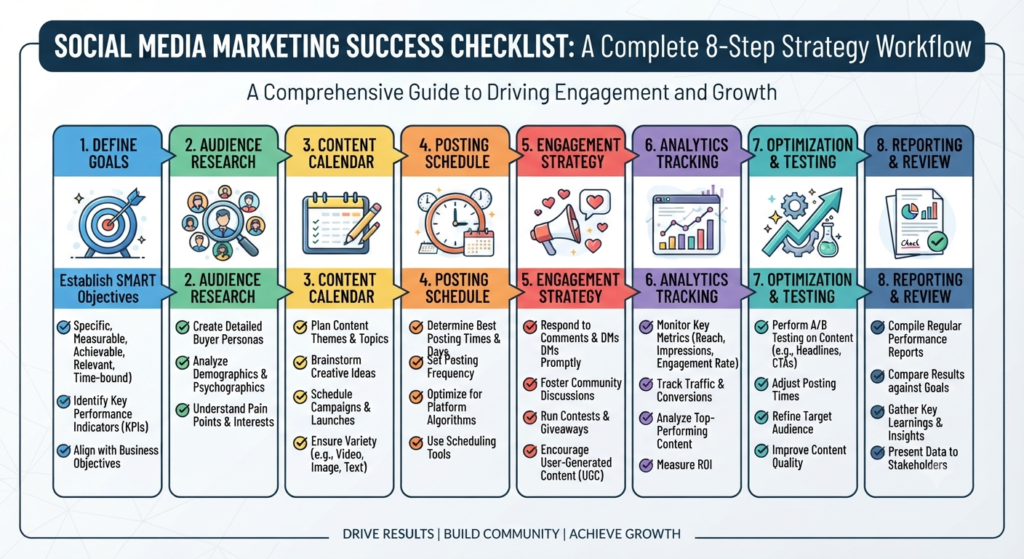
Social Media Marketing Checklist
Before publishing, confirm that you have:
✔ Defined clear business goals
✔ Researched your audience
✔ Selected the right platforms
✔ Created a content calendar
✔ Designed high-quality visuals
✔ Written engaging captions
✔ Included a clear call to action
✔ Optimized hashtags where appropriate
✔ Scheduled content
✔ Planned audience engagement
✔ Reviewed analytics from previous campaigns
Frequently Asked Questions
What is Social Media Marketing?
Social Media Marketing is the process of using social media platforms to promote a business, engage audiences, increase brand awareness, and achieve marketing objectives through valuable content and strategic communication.
Which social media platform is best for businesses?
The best platform depends on your audience and goals. For example, LinkedIn is often effective for B2B marketing, while Instagram and Facebook are popular for consumer-focused businesses.
How often should I post on social media?
Posting frequency varies by platform and audience. A consistent schedule with high-quality content is generally more effective than posting excessively.
Is Social Media Marketing free?
Creating and publishing organic content is generally free, but businesses may choose to invest in paid advertising to expand reach and achieve specific marketing goals.
How long does it take to see results?
Results depend on factors such as consistency, audience engagement, content quality, and competition. Building a strong presence typically requires ongoing effort and continuous improvement.
Conclusion
A successful Social Media Marketing strategy is built on understanding your audience, creating valuable content, maintaining consistency, and continuously improving based on performance data. Rather than focusing only on gaining followers, businesses should aim to build genuine relationships that create trust, encourage engagement, and support long-term growth.
One of the greatest strengths of Social Media Marketing is its ability to connect brands with customers throughout every stage of the buying journey. Educational posts help create awareness, engaging conversations build trust, customer testimonials strengthen credibility, and promotional campaigns encourage conversions. When these elements work together, social media becomes much more than a communication channel—it becomes a powerful business growth tool.
Remember that success rarely comes from viral posts alone. Consistent publishing, meaningful audience interactions, thoughtful content planning, and regular performance analysis contribute far more to sustainable results than chasing short-term trends. Review your analytics, experiment with different content formats, and adapt your strategy as audience preferences evolve.
Businesses that treat Social Media Marketing as an ongoing process instead of a one-time campaign are better positioned to increase brand visibility, generate qualified leads, improve customer loyalty, and drive measurable business outcomes. By combining creativity with strategic planning and data-driven decision-making, you can build a social media presence that supports your broader marketing objectives for years to come.